



Overview
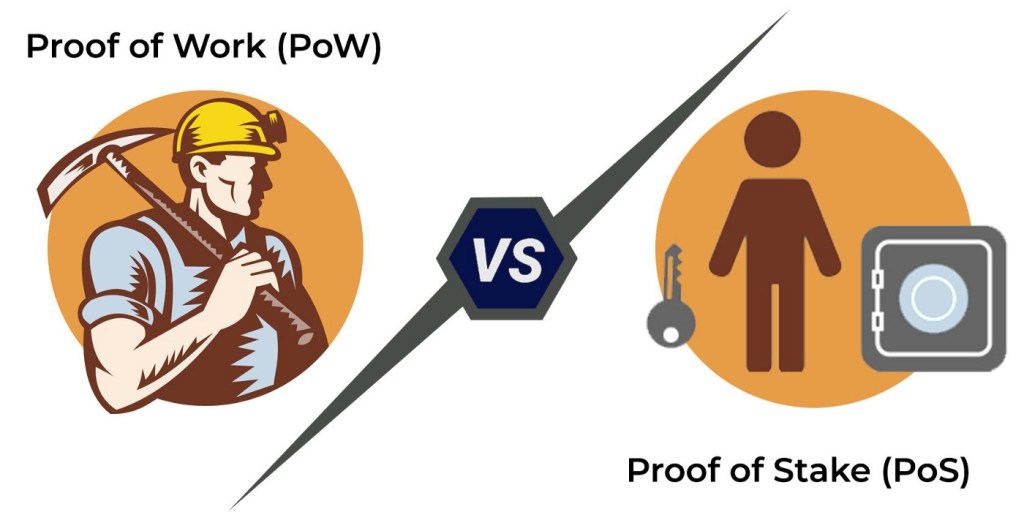
Proof of Work and Proof of Stake are two different consensus mechanisms used by cryptocurrencies to add transactional data to their blockchains. The blockchains need to solve an algorithmic puzzle in order to verify the transactions without using a central authority. The consensus mechanism allows for a trustless model without intermediaries to make automated financial transactions. This lessens the barrier to entry for a digital, global financial system and an honest system powered by computers. Proof of Work is the first consensus mechanism, proven to work, which gave birth to other consensus mechanisms such as Proof of Stake. The Crypto Scrubs Podcasts does an overview of what it means when Proof of Stake will arrive for Ethereum 2.0.
What is Proof of Work?
Proof of Work (PoW) is a consensus algorithm that requires network nodes(miners) to perform extremely complex computations in order to validate transactions on the block also known as the ledger(block).
The blockchain network gives a reward to the miner node that successfully completes the necessary computation to complete the next block on the chain. The participating winner(miner) of completing the next block is rewarded with the native fungible token. In order to complete the next block on the chain, all the nodes on the network validate the transaction that has taken place and is recorded as a ledger. Essentially all the nodes fight for the lottery to win the native token based on the hash rate. Higher the hash rate, higher the chance of winning more of the native token.
How does Proof of Work work?
PoW is run by network validators called miners that provide hardware – computational power necessary to generate the next block, and validate transactions. The miners who solve the algorithmic puzzle for the next block will be rewarded with the native token for their efforts.
Basic summary of how PoW algorithm works:
1. Users on the network conduct transactions by sending crypto to one another.
2. Transactions are recorded on the “Blocks” and created over a certain time period (within 10 minutes of each other for Bitcoin).
3. Miners use their computation power known as hash rate to solve complex mathematical puzzles for the next “Block”.
4. The authenticity of the transactions within the “Blocks” are validated by the miner who solves the puzzle first, and then is confirmed by other miners by recording the incident on the block/ledger.
5. Once validated, the blockchain adds the block of confirmed transactions to the end of the chain making up the ledger.
6. The process repeats to create the next block on the chain.
Pros and Cons of Proof-of-Work
The greatest benefit of Proof-of-Work is that it has been proven to be the most secure network in the entire ecosystem. Hacking or attempting to control the network would be extremely difficult and expensive for the likes of Bitcoin with its incredible hash rate. Furthermore, the miners that make up the network are very much distributed across the world, making it less vulnerable to any central point of weakness. A great example would be like the internet cloud system of datacenters that are hidden all around the world. If one system goes down, the other data centers would be able to maintain the network by taking its load from the downed data centers.
Proof-of-Work also has the longest history of secured network uptime. As of today, many iterations of Proof-of-Work came out from other projects and protocols, but are still in their infancy stage. The great benefit of Proof-of-Work is the ability to join the network and secure the network without having to own any of the native token.
The cons of joining an increasingly popular cryptocurrency is what it takes to join the network. Over the years, higher energy consumption and specialized hardware is needed to maintain the growing network, making it harder for individuals to join without some serious capital. This is leading to a centralized group of miners who understands how to maintain highly-specified hardware that requires specific attention such as heat, electricity, and computation to secure the PoW network. This introduces a new problem that compromises Bitcoin’s most important feature: its security and decentralization. If mining becomes unaffordable for ordinary users, blocks and transactions will only be confirmed by the few who have control over the laws, the network, and hardware technology. This outcome would lead to a decrease in security and make it impossible for anyone without a special title to join the network. We would then be reverting back to the dollar age where the quote “He who controls the money supply of a nation controls the nation.” James A Garfield (We don’t want any centralization with new money).
Bonus information
Proof of Work is a cryptographic hash function based on SHA 256 which was designed and first published by the United States National Security Agency in 2001. Patented by the United States NSA, SHA 256 was released as a royalty-free license. https://en.wikipedia.org/wiki/SHA-2
What is Proof of Stake
Proof of stake is a distributed consensus mechanism that contains digital records and transactional data on a block. Proof of Stake requires validators to stake a certain amount of blockchain’s native currency in order to participate in solving complex mathematical problems. Validators are responsible for the same thing as miners in Proof of Work: ordering transactions and creating new blocks so that all nodes can agree on the current state of the network.
Validators are chosen at random to create the next block and are responsible for checking and confirming current blocks. Validators who stake the native asset on their blockchain have the right to verify transactions in the block, and receive reward in their native token. The validator that receives the native token is usually based on lottery; therefore, the more you have staked on the network, the higher chance of being rewarded. Once the validator is chosen, the validator verifies the transaction on the block and then repeats the cycle for the next block.
After the validation process is complete, the block is added to the network permanently. Staking usually requires that you lock the tokens to the network during the validation process to further incentivize its security and accuracy of its transactions. The block reward can fluctuate based on block sizes and gas prices, which is why the reward for some blocks is higher than others. In cases of incorrect verifications, where validators try to verify incorrect blocks and transactions, they will be banned from the network.
Pros and Cons of Proof of Stake
The ultimate reason why Proof of Stake was born was to scale the blockchain so that it can easily include a higher number of transactions on the network. The limitations of Proof-of-Work computing power has led to Proof of Stake as an alternative consensus mechanism. The pros of moving to PoS is that it is more energy efficient without the need of hardware and electricity to run its network. PoS also makes it harder for hackers or malicious attacks from taking control of the network since it is very expensive for someone to own a majority stake in the network. There is no incentive to attack the network of this type; because the amount of stake tokens would be forfeited in an attempt to manipulate a block that yields less in block reward.
The cons of Proof of Stake are that it is less battle-tested in its uptime and security than its counterpart Proof of Work. This raises some concern for the future of growth in network effect and if it’ll be adequately decentralized. Many of its wealthiest validators will earn the most from the network such as founders, developers, and investors versus the smaller individuals on the network. We may see a huge growth in securing its network with its early adopters but may fail to grow if joining the network becomes very expensive in the long run. PoS incentivize users to hold their token rewards instead of circulating it to the public because there is little to no cost to running a PoS node. This will cause the price to skyrocket (if demand remains to grow) and the circulation of the token will most likely be held by the richest holders. This incentive will allow the rich to become richer.
If you made it this far into the page please feel free to listen to our podcast on our thoughts on Ethereum 2.0 and its move to Proof of Stake.
 The Crypto Scrubs Podcast